
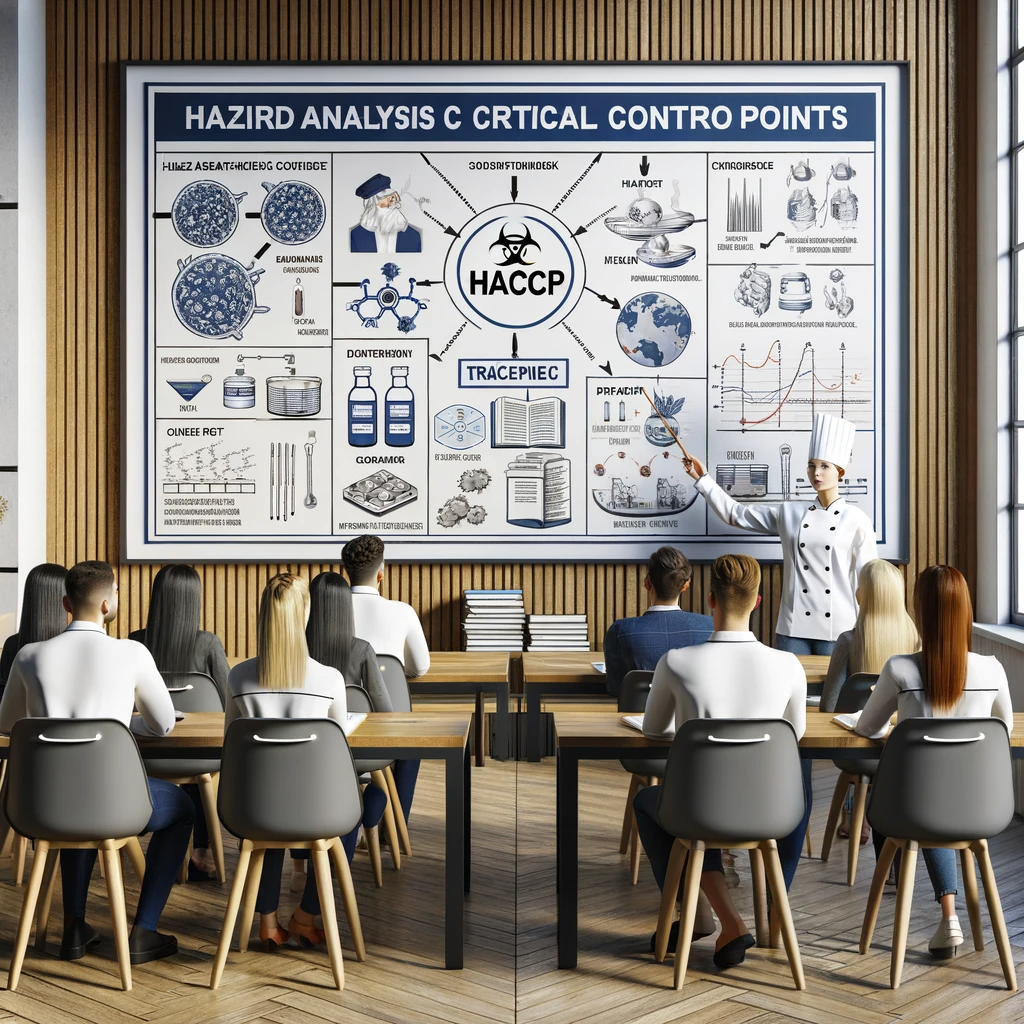
HACCP stands for Hazard Analysis and Critical Control Points. It is a globally recognized food safety management system that helps businesses in the food industry identify and control potential hazards throughout their production processes . By implementing HACCP principles, businesses can ensure the safety and quality of their food products, protect consumers from foodborne illnesses, and enhance their brand reputation.
The Importance of HACCP
Food safety is paramount in today’s world. Consumers are increasingly aware of the risks associated with foodborne illnesses and demand safe, high-quality products. HACCP provides a proactive approach to food safety by focusing on prevention rather than reaction. HACCP marks a significant shift from reactive responses to food contamination towards a proactive system of prevention . By identifying and controlling potential hazards at every stage of the food production process, businesses can minimize the risk of contamination and ensure the safety of their products.
The Seven Principles of HACCP
The HACCP system is based on seven fundamental principles :
Conduct a Hazard Analysis: This involves identifying potential hazards that could occur at any point in the food production process, from raw material sourcing to final product consumption. Hazards can be biological (e.g., bacteria, viruses), chemical (e.g., pesticides, cleaning agents), or physical (e.g., glass, metal fragments).
Determine Critical Control Points (CCPs): CCPs are specific points in the food production process where control measures can be applied to prevent, eliminate, or reduce hazards to an acceptable level. Examples of CCPs include cooking temperatures, chilling times, and metal detection.
Establish Critical Limits: Critical limits are the maximum or minimum values that must be met at each CCP to ensure that hazards are controlled. For example, a critical limit for cooking poultry might be a minimum internal temperature of 74°C (165°F), while a critical limit for the pH of a sauce might be 4.6
- Establish Monitoring Procedures: Monitoring procedures are used to track CCPs and ensure that critical limits are consistently met. This may involve regular temperature checks, visual inspections, or microbiological testing.
Establish Corrective Actions: Corrective actions are predefined steps that must be taken if a critical limit is not met. This may involve reprocessing the food, discarding it, or investigating the cause of the deviation.
Establish Verification Procedures: Verification procedures are used to confirm that the HACCP system is working effectively. This may involve internal audits, independent reviews, or microbiological testing of finished products.
Establish Record-Keeping Procedures: Accurate record-keeping is essential for demonstrating compliance with HACCP principles. Records may include hazard analyses, CCP monitoring data, corrective actions taken, and verification activities.
Benefits of Implementing HACCP
Implementing HACCP offers numerous benefits for food businesses, including:
- Enhanced Food Safety: HACCP helps to prevent foodborne illnesses and protect consumer health.
- Improved Quality: By focusing on hazard control, HACCP helps to ensure the consistency and quality of food products.
- Increased Efficiency: HACCP can help to streamline production processes and reduce waste.
- Enhanced Brand Reputation: HACCP certification demonstrates a commitment to food safety and can enhance brand trust and customer loyalty.
- Reduced Costs: By preventing food safety incidents, HACCP can help to reduce costs associated with product recalls, legal liabilities, and damage to brand reputation.
- Improved Compliance: HACCP helps businesses to comply with food safety regulations and standards.
HACCP Certification
HACCP certification is a formal recognition that a business has implemented a HACCP system that meets recognized standards. Certification is typically awarded by independent third-party organizations and involves a thorough assessment of the business’s food safety management system.
HACCP and Legal Requirements
In many countries, HACCP is a legal requirement for certain types of food businesses . This is particularly true for businesses involved in the manufacturing, processing, and handling of high-risk foods, such as meat, poultry, dairy products, and seafood. These regulations are in place to protect public health and ensure the safety of the food supply.
HACCP in Practice
HACCP principles can be applied to a wide range of food businesses, from small-scale producers to large multinational corporations. Here are some examples of how HACCP is used in practice:
Restaurants: Restaurants use HACCP to control hazards in food preparation, storage, and service. This may involve temperature control for cooking and storing food, proper handwashing procedures, and preventing cross-contamination between raw and cooked foods. For example, a restaurant might establish a CCP for cooking hamburgers, with a critical limit of 71°C (160°F) to ensure that the burgers are cooked to a safe temperature.
Food Manufacturing: Food manufacturers use HACCP to control hazards throughout their production processes, from raw material sourcing to packaging and distribution. This may involve CCPs for heat treatment, chilling, metal detection, and allergen control. For instance, a manufacturer of canned soup might have a CCP for the sterilization process, with critical limits for time and temperature to ensure that all harmful bacteria are eliminated.
Retail Food Stores: Retail food stores use HACCP to control hazards in receiving, storing, and displaying food products. This may involve temperature control for refrigerated and frozen foods, proper handling of fresh produce, and preventing cross-contamination. A supermarket, for example, might have a CCP for receiving fresh produce, with a critical limit for temperature to ensure that the produce is kept at a safe temperature to prevent bacterial growth.
Bottling and HACCP
Bottling is a critical process in the production of many beverages, such as water, juice, and soft drinks. HACCP plays a crucial role in ensuring the safety and quality of bottled beverages . Some key CCPs in the bottling process include:
- Cleaning and Sterilization: Bottles and equipment must be thoroughly cleaned and sterilized to eliminate potential contaminants.
- Filling and Sealing: Proper filling and sealing procedures are essential to prevent contamination and maintain product quality.
- Pasteurization or Sterilization: Many bottled beverages undergo pasteurization or sterilization to eliminate harmful microorganisms.
- Labeling and Coding: Accurate labeling and coding are essential for traceability and product identification.
Key HACCP Procedures: Traceability and Sanitation
Two key procedures within the HACCP system are traceability and sanitation .
Traceability refers to the ability to track a food product through all stages of the production process, from raw materials to the final consumer. This is essential for identifying the source of contamination in the event of a food safety incident. Traceability can be achieved through various methods, such as labeling, barcodes, and record-keeping systems.
Sanitation involves maintaining a clean and hygienic environment throughout the food production process. This includes cleaning and disinfecting equipment, surfaces, and utensils, as well as implementing effective pest control measures. Proper sanitation helps to prevent cross-contamination and reduce the risk of foodborne illnesses. The manual of good hygiene practices provides detailed guidelines on sanitation procedures for various food sectors .
Conclusion
HACCP is a vital system for ensuring food safety and protecting consumer health. By implementing the seven principles of HACCP, food businesses can proactively identify and control potential hazards, improve the quality of their products, and enhance their brand reputation. HACCP certification provides independent verification of a business’s commitment to food safety and can provide a competitive advantage in the marketplace. Traceability and sanitation are essential components of HACCP, ensuring that food products are safe and traceable throughout the production process. By embracing HACCP, the food industry can contribute to a safer and healthier food supply for all.