
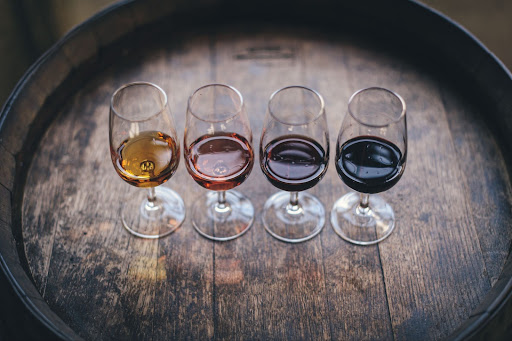
This article is about the wine production process from grape harvesting to bottling, passing through the different steps, such as grape picking, pressing, fermentation, racking, maturation, and bottling. It also explains how red wine is produced and what are the key steps to obtain a high quality product.
Wine is a highly prized drink in Italy, to the point that true connoisseurs always aim for a quality product guaranteed by an international hallmark. At first glance, wine quality can be established by its aroma, structure, complexity, taste and its persistence on the palate. Let’s have a look at how wine is made and the factors determining the quality of a fine wine.
The steps of wine production are six:
- Grape harvesting
- Pressing
- Fermentation
- Racking
- Maturation
- Bottling
The baseline to produce a good wine are quality grapes, which will depend on the vineyard, its exposition, the soil, and the daily care of the vines. This labour translates passion into a high quality final product. Keep reading to see how wine is produced.
How wine is produced
Underlying the production of wine is a fundamental chemical process, which transforms the selected raw material into ethyl alcohol, the ingredient that gives the alcohol content to the product. This step is called fermentation. Let us explain in detail how wine is produced.
The starting raw material is grapes, and their type will depend on the type of wine to be produced, hence the wine-vineyard duo plays a pivotal role. If we take the Sangiovese wine into account, although there are some land-bound logistics, it must possess some characteristics such as colour, smell, and taste, that are clearly linked to the vine variety.
Wine production, though, starts from the harvesting, the crowning event after one year of hard work in the vineyard: cultivation, manuring, irrigation, vines pruning and, finally, grape harvesting.
Each Italian region has its own harvesting calendar, depending on the maturation of the grapes (even though it is typically during the summer and the beginning of autumn). Harvesting begins with the collection of grapes and is the first step in the wine production cycle. What about the other steps? Keep reading to know more!
How wine is made step by step

Wine production varies according to the different regions, the grape varieties and, most importantly, the type of wine to be produced. Either way, the basic wine production steps are exactly the same for all vineyards:
- Grape harvesting: the grapes are harvested either manually or with dedicated tools when they are mature, i.e. when they reach the correct level of sugars and acidity.
- Pressing: the grapes are pressed to extract the must, namely the juice that will become wine.
- Fermentation: the must is placed inside steel or wooden containers, where yeasts will be added in order to transform the must sugars into ethyl alcohol and carbon dioxide.
- Racking: after fermenting for a few days or weeks, the wine is separated from the grape peels and the seeds, which are then removed.
- Maturation: the wine is stored into wood barrels — or glass bottles — for some months or even years. During this time, the wine ages and develops its characteristic aromas and flavours.
- Bottling: the wine is filtered, bottled and sealed with a cork or plastic stopper.
How to make red wine
Depending on their colouring and their organoleptic and body qualities, various types of wines can be found out there:
- Red wines
- White wines
- Rosé wines
- Sparkling wines

Alright, but… how is red wine made?
Red wine comes to life by pressing red grape berries. Unlike white wine, where the grape peels have to be separated from the must, it is fundamental to let the red grape peels touch the must during the fermentation process, as they contain polyphenolic molecules with colouring properties. By letting the grape peels completely touch the must right after pressing and during fermentation, the colour starts taking shape.
After various pressings, the must will be fermented into basins. Then, the wine will be filtered and clarified to be poured in containers of different materials. Sometimes, a second round of fermentation might take place. Finally, the wine will be aged for a couple of years, depending on the type of wine one wants to make.
How long does red wine fermentation take
The fermentation of red wine, it usually takes from 4–6 days to 20–30 days.
During this time, the yeasts convert the must’s sugar into alcohol and carbon monoxide. Once the sugar level drops to an adequately low level, or once the alcohol reaches a certain level, the yeasts will stop and the fermentation step comes to an end. In some cases, the producer might choose to artificially stop the fermentation in order to keep a certain level of sweetness in the wine, or they might let the fermentation continue even during the racking step.
How to make white wine
Now let’s have a look at how to make white wine. White wine follows the same production process as red wine, with only one difference: during fermentation, grape peels will not macerate with the must, rather they will be eliminated along with the other solid elements such as peels, stalks and seeds.
White wine can be made with red grape berries as well, and once the fermentation phase is complete, the wine will then be clarified and filtered to be finally bottled. Unlike red wines, white wines usually need a lower ageing period. Sometimes the producer might apply acidity regulators, as well as clarifying and stabilising ones, but this can be done for both white and red wines.
How long does white wine fermentation take
Typically, white wine fermentation takes place at a low, controlled temperature between 16 and 20 °C, which allow for the stimulation of the production of volatile compounds that give the desired organoleptic properties. The white wine fermentation usually takes from 5 to 12 days. It is important to note that fermentation depends on many factors, such as temperature, pressure, and the type of wine to be produced.
Tools for making wine
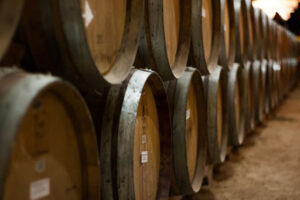
As far as tools for making wine are concerned, the basic ones are:
- Grape crusher: a tool used to crush the grapes and free the must.
- Grape juice press: used to press the grapes and get the must.
- Pressing machine: a tool capable of extracting the residual must from the grapes and therefore increase their output.
- Fermentation basins: containers used to ferment the must, which can be made either of wood or steel.
- Tools to evaluate the must properties: pipettes, thermometers, hydrometer, refractometers
- Wine filters: used to filter the wine after fermentation
- Ageing barrels: containers used to age wine.